
Key Takeaways
- Incorrect Medicare death records immediately stop claim payments.
- Most errors originate from provider billing mistakes, SSA records, or RRB data mismatches.
- Correcting the source of the error quickly helps restore eligibility and prevent reimbursement delays.
- Strong eligibility verification processes significantly reduce future claim denials.
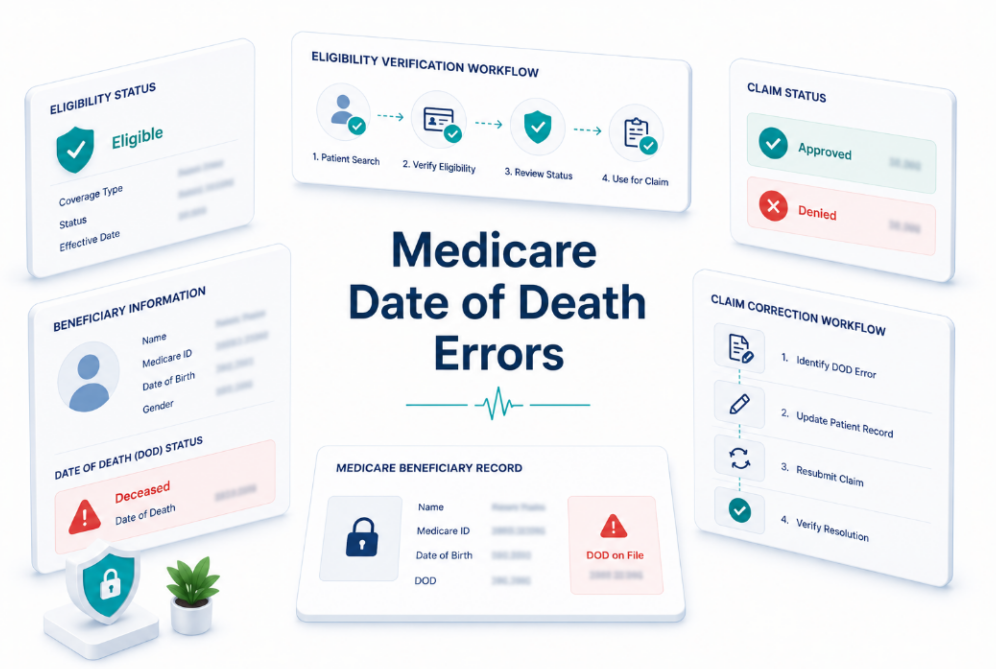
Few billing problems create more confusion than discovering Medicare believes a living patient has passed away. Medicare Date of Death Errors immediately interrupt reimbursement and force billing teams into time-consuming corrective work.
For practice managers, healthcare providers, clinic owners, and medical billing professionals, these errors affect far more than one claim. They disrupt healthcare revenue cycle management, increase claim denials, delay payments, and consume valuable staff resources that could be focused on patient care.
Why These Errors Create Major Revenue Problems
CMS relies on beneficiary eligibility records before processing Medicare claims. When a patient is incorrectly identified as deceased, every claim submitted after the recorded date of death is automatically denied.
These denials rarely remain isolated. A single eligibility error can delay physician services, outpatient visits, therapy claims, laboratory testing, and even secondary insurance payments.
The financial impact grows quickly as accounts receivable increase and billing teams spend hours researching an issue that originated from a simple data error.
A Common Real-World Scenario
Imagine an elderly patient completing rehabilitation after surgery.
During claim submission, the facility accidentally reports Discharge Status Code 20 (Expired) instead of the appropriate discharge code. The mistake reaches Medicare and updates the patient’s eligibility record.
A few weeks later, the patient’s primary care physician, cardiologist, and physical therapist all receive claim denials stating the beneficiary is deceased.
Although the patient is alive, every provider must now suspend billing while the original facility corrects the error. Until that correction is processed, reimbursement remains on hold and secondary insurers may also reject new claims.
Where Medicare Date of Death Errors Begin
Most Medicare death-date issues originate from one of three sources.
Healthcare providers occasionally submit incorrect discharge status codes or Occurrence Code 55 during institutional billing. These mistakes are usually accidental but immediately affect Medicare eligibility.
Some errors originate within the Social Security Administration after identity mismatches or clerical mistakes. Others occur through the Railroad Retirement Board for eligible railroad beneficiaries.
Because these federal systems exchange eligibility information electronically, one incorrect record can quickly spread across multiple payer systems.
Correcting Provider Billing Errors
When the error originated from a healthcare provider, the billing department should act immediately.
If the patient is alive, the facility should submit an adjusted claim, remove the incorrect date of death, correct the discharge status code, and delete Occurrence Code 55 if it was reported incorrectly.
After Medicare updates its records, providers should verify eligibility before resubmitting previously denied claims. Taking this additional step helps prevent another unnecessary rejection.
If the patient is deceased but the reported date is incorrect, the discharge status remains unchanged. Instead, the facility should update Occurrence Code 55 using the verified legal date of death and review related claims to ensure all service dates remain consistent.
When the Error Comes from SSA or RRB
Healthcare providers cannot directly modify beneficiary death records maintained by the Social Security Administration or Railroad Retirement Board.
Instead, the patient or their legal representative must contact the appropriate agency and provide supporting identification or legal documentation. Once the federal record is corrected, Medicare eligibility is typically updated within several business days.
During this period, billing teams should continue monitoring eligibility to determine when claims can be resubmitted successfully.
Preventing Future Eligibility Problems
Correcting Medicare eligibility errors requires far more effort than preventing them.
Practices should verify Medicare eligibility before every patient encounter rather than relying on previous verification results. Even long-term patients can experience unexpected eligibility changes.
Regular staff education also plays an important role. Billing specialists should understand how discharge status codes and institutional claim data affect Medicare records long after a patient leaves the facility.
Routine internal audits help identify documentation inconsistencies before claims reach Medicare. Reviewing claims containing discharge status codes associated with patient status changes can prevent costly reimbursement delays.
Practices looking to strengthen front-end claim accuracy should also review our MA04 Denial: Fix Medicare Secondary Claims and Medicare Reimbursement: Reduce Delays & Denials guides. These resources provide additional strategies for improving coding accuracy, reducing payer rejections, and strengthening reimbursement workflows.
Keep Your Revenue Cycle Moving
Resolving Medicare Date of Death Errors requires quick action, accurate documentation, and a thorough understanding of Medicare billing requirements. The longer these errors remain unresolved, the greater the impact on cash flow, claim denials, and administrative workload.
Claims Med helps healthcare organizations resolve Medicare eligibility issues, improve medical billing accuracy, and optimize every stage of the revenue cycle. Our experienced billing specialists identify problems before claims are submitted, reduce preventable denials, and help providers receive timely reimbursement.
If recurring Medicare billing challenges are slowing your practice down, let Claims Med help. Contact us today at https://claimsmed.com/contact-us/ to learn how our revenue cycle management experts can improve your financial performance while your team focuses on delivering exceptional patient care.