
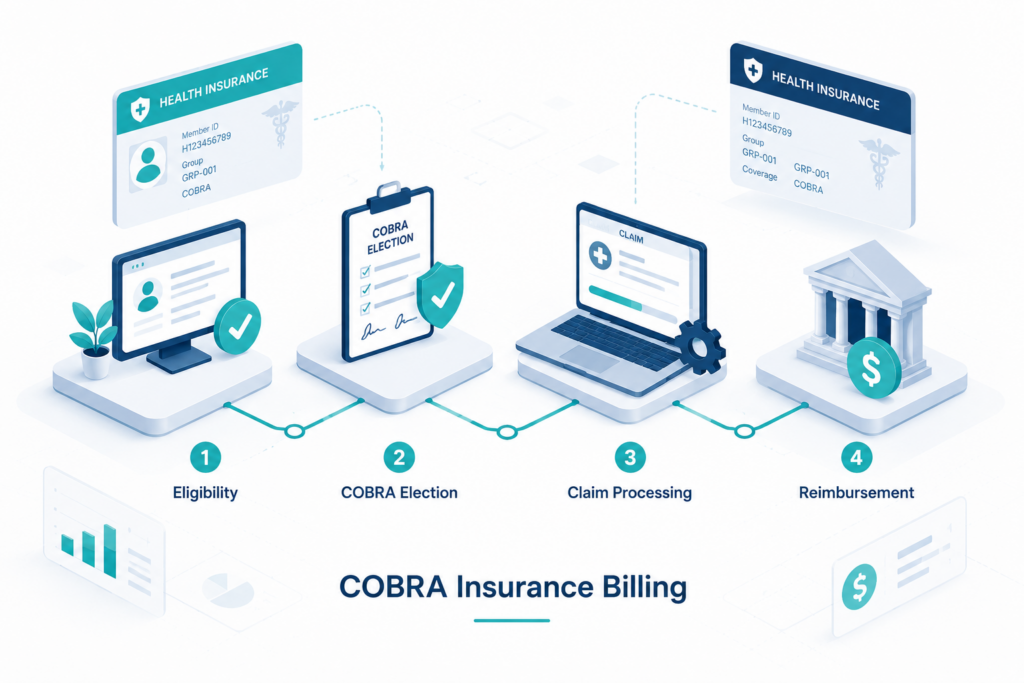
For healthcare providers and practice managers, COBRA Insurance Billing is far more than an HR issue. In modern healthcare operations, COBRA directly impacts claim reimbursement, patient collections, and revenue cycle stability. When patients lose employer-sponsored insurance, practices often face eligibility gaps, retroactive denials, and delayed payments that create major financial disruption.
In 2026, practices that fail to manage COBRA-related billing workflows proactively risk losing thousands in collectible revenue. More importantly, improper handling of coverage transitions can damage patient relationships and increase administrative burden across the billing department.
The Problem: Why COBRA Insurance Billing Creates Revenue Cycle Risk
Many healthcare organizations underestimate the operational impact of COBRA transitions. Although patients may technically retain coverage rights, billing systems frequently show policies as “terminated” during the election window. As a result, practices often submit claims that reject immediately due to inactive coverage.
This creates a dangerous gap in insurance claims processing.
For example, imagine a patient loses their job on May 1st but undergoes surgery on May 10th. At the time of service, eligibility portals may display inactive insurance status. However, under COBRA rules, the patient still has 60 days to elect continuation coverage retroactively.
If your billing team immediately writes off the balance or aggressively bills the patient, the practice may:
- Lose collectible reimbursement
- Trigger patient disputes
- Increase accounts receivable aging
- Damage long-term patient retention
Additionally, delayed COBRA elections create confusion across front-office operations, eligibility verification, and payer follow-up workflows.
For healthcare practices managing high patient volumes, these gaps quickly turn into substantial revenue leakage.
Understanding COBRA Insurance Billing and Coverage Rules
COBRA allows eligible employees and dependents to continue employer-sponsored health coverage after qualifying life events such as:
- Job loss
- Reduction in work hours
- Divorce
- Death of the covered employee
- Dependents aging out of coverage
Under federal law, employers with 20 or more employees generally must offer continuation coverage. However, patients assume full premium responsibility plus a 2% administrative fee.
This cost increase often surprises patients and delays payment decisions.
The Real Financial Risk: Retroactive Denials
The biggest challenge in COBRA Insurance Billing involves retroactive eligibility activation.
Consider this scenario:
A patient receives treatment while their insurance appears inactive. Thirty days later, the patient elects COBRA and pays the premium retroactively. Coverage then becomes active back to the termination date.
However, if your billing staff already:
- Closed the claim
- Sent collections notices
- Wrote off the balance
- Failed to resubmit the claim
Your practice absorbs unnecessary financial loss.
These situations frequently cause:
- Claim denials
- Delayed reimbursements
- Rework costs
- Increased denial management labor
Ultimately, poor COBRA workflow management weakens overall healthcare revenue cycle management performance.
Step-by-Step Solution: How Practices Should Manage COBRA Insurance Billing
1. Perform 48-Hour Eligibility Verification
First, verify insurance coverage 48 hours before appointments for patients with recent employment changes.
If eligibility shows “inactive,” staff should immediately investigate whether the patient remains within the COBRA election window.
This proactive approach prevents front-desk confusion and improves reimbursement workflows.
2. Train Staff to Identify COBRA Election Windows
Next, front-desk and billing teams should ask:
- “Have you recently changed jobs?”
- “Are you currently within a COBRA election period?”
These simple questions help practices avoid premature denials and inaccurate patient billing.
3. Keep Claims in Pending Status Strategically
Instead of immediately writing off inactive claims, place potential COBRA claims into a monitored pending status.
This allows billing teams to:
- Wait for retroactive activation
- Resubmit claims correctly
- Avoid unnecessary patient balance transfers
As a result, practices protect collectible revenue.
(Related reading: N30 Denial – Stop Eligibility Rejections)
4. Implement Transition Deposit Policies
Some practices now require temporary transition deposits for patients in COBRA gaps.
Once the payer processes retroactive coverage:
- The claim pays normally
- The practice refunds the deposit
This strategy improves cash flow while reducing collection risk.
5. Document Every COBRA Communication
Strong documentation protects against payer disputes and compliance concerns.
Practices should immediately upload:
- COBRA election forms
- Patient communication records
- Eligibility screenshots
- Coverage confirmation details
Accurate records improve coding accuracy and strengthen audit defense.
6. Coordinate Front-End and Billing Teams
Finally, successful COBRA management requires collaboration between:
- Front desk staff
- Eligibility verification teams
- Medical billing departments
- Denial management specialists
Without alignment, claims often fall into administrative limbo.
(Related reading: CO-22 Denial Code Prevention – The 7-Step COB Plan)
Protect Revenue with Smarter COBRA Insurance Billing
In 2026, healthcare organizations cannot afford reactive billing workflows. Proper COBRA Insurance Billing management helps practices prevent retroactive denials, reduce reimbursement delays, and maintain stable cash flow during patient coverage transitions.
By improving eligibility verification, training staff proactively, and monitoring pending claims carefully, practices can eliminate unnecessary revenue leakage and strengthen long-term financial performance.
At Claims Med, we help healthcare providers streamline medical billing, manage complex insurance transitions, and optimize revenue cycle management with expert RCM support.
👉 Contact Claims Med today: Let our experts help you reduce denials, accelerate reimbursements, and protect every dollar your practice earns.