
HealthcareRCM

How to Check NCCI Edits

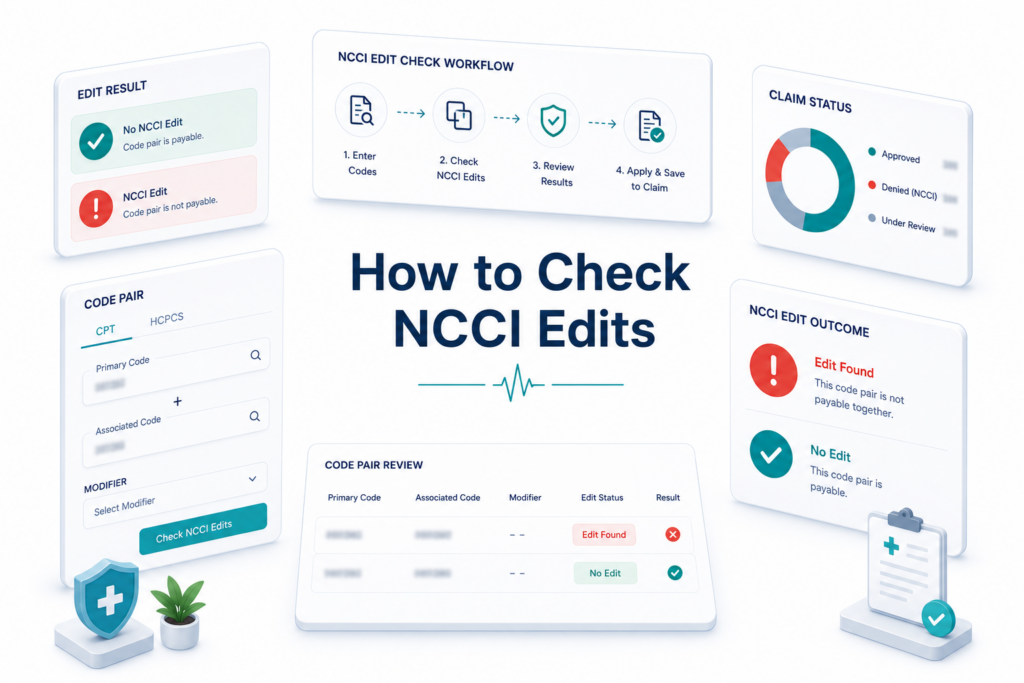
How to Check NCCI Edits Before Billing Claims

Medical billing accuracy is critical for maintaining a healthy revenue cycle. One of the most overlooked causes of claim denials and reimbursement delays is failing to review National Correct Coding Initiative (NCCI) edits before claim submission. Understanding how to check NCCI edits can help healthcare providers, practice managers, and medical billing teams prevent avoidable denials, […]

How to Check NCCI Edits Before Billing Claims Read More »

Denial Code 203

Denial Code 203: Reduced Services Fix Guide

Practice managers, healthcare providers, and practice owners frequently face the disruptive challenge of Denial Code 203 Reduced Services. This denial occurs when insurers reject claims for services deemed either reduced or prematurely discontinued. Consequently, these rejections directly threaten cash flow. They signify discrepancies between the service billed and the service documented or authorized. Addressing Denial

Denial Code 203: Reduced Services Fix Guide Read More »

Remark Code N56

Remark Code N56: Invalid Procedure Code Fix Steps

Remark N56 is a common denial remark code that indicates the procedure code submitted on a claim is invalid, incorrect, or not appropriate for the date of service or the services rendered. Although this denial may seem like a simple coding issue, it can create significant reimbursement delays, increase administrative workload, and negatively affect revenue

Remark Code N56: Invalid Procedure Code Fix Steps Read More »

N623 Denial

N623 Denial: Unproven Services Fix Guide

Remark N623 is a denial code that indicates a service, procedure, treatment, or item is considered unscientific, experimental, investigational, outdated, excessive, inappropriate, or not medically accepted according to the payer’s coverage policies. These denials can create significant reimbursement challenges because insurance companies often refuse payment for services they believe lack sufficient clinical evidence or do

N623 Denial: Unproven Services Fix Guide Read More »

Remark M26

Remark M26: Documentation Mismatch Fix Guide

Remark M26 is a common denial reason that occurs when the information submitted on a claim does not support or justify the level of service billed. This denial often indicates that the payer believes the documentation, diagnosis, or coding does not adequately demonstrate the medical necessity or complexity of the service provided. When a Remark

Remark M26: Documentation Mismatch Fix Guide Read More »

Denial Code 136

Denial Code 136: Prior Payer Rules Fix Guide

Denial Code 136 occurs when a secondary payer denies a claim because the provider did not follow the prior payer’s coverage rules. This denial is usually reported with Group Code OA, which means the adjustment is not tied directly to patient responsibility or contractual obligation. For healthcare providers, practice managers, and billing teams, these denials

Denial Code 136: Prior Payer Rules Fix Guide Read More »

Denial Code 177

Denial Code 177: Fix & Prevention Checklist

Denial Code 177 is a common eligibility-related denial that occurs when a patient does not meet the payer’s coverage requirements for the billed service. These denials often arise when eligibility information, benefit requirements, referrals, authorizations, or coverage conditions are not verified before treatment. As a result, healthcare organizations may experience delayed reimbursements, increased administrative work,

Denial Code 177: Fix & Prevention Checklist Read More »

Denial Code 272

Denial Code 272: Coverage Guidelines Fix Guide

Denial Code 272 occurs when a claim does not meet the coverage or program requirements established by the insurance payer. This denial often results from missing authorizations, eligibility issues, benefit limitations, documentation gaps, or coordination of benefits errors. As a result, healthcare providers may face delayed reimbursements, increased administrative work, and unnecessary revenue loss. For

Denial Code 272: Coverage Guidelines Fix Guide Read More »

Denial Code 160

Denial Code 160: Benefit Exclusion Fix Guide

Denial Code 160 is a common payer denial that occurs when an injury or illness results from an activity excluded under the patient’s insurance policy. These exclusions often involve high-risk activities, policy limitations, non-covered services, or situations that fall outside the insurer’s coverage guidelines. As a result, healthcare providers may face reimbursement delays, increased appeals

Denial Code 160: Benefit Exclusion Fix Guide Read More »